Why gas furnace diagnosis is its own skill
A gas furnace is a combustion appliance operating inside a living space. Every cycle depends on a chain of proofs: draft established, flame confirmed, temperature within limits. A repair that restores heat without verifying those proofs is not finished.
That is why our diagnostic process follows the sequence of operations from the thermostat call through shutdown, rather than starting with a guess about which part to replace.
The repairs we see most often
- Flame sensor cleaning or replacement after short-run lockouts
- Hot surface igniter replacement on no-ignition calls
- Pressure switch and draft faults, frequently caused by blocked terminations or condensate
- Inducer motor replacement after bearing or corrosion failure
- Limit switch trips caused by airflow restriction
- Blower motor and capacitor failures on the air side
- Control board faults and blown low-voltage fuses
- Gas valve replacement, always with leak testing and pressure verification
Single-stage, two-stage and modulating equipment
Older single-stage furnaces fire at one output and either run or do not. Two-stage furnaces spend most of the season on low fire, producing longer, gentler cycles and steadier room temperatures. Modulating furnaces vary output across a wide range and pair with variable-speed blowers.
Each type carries different controls and different failure modes. A two-stage furnace stuck in high fire, or a modulating furnace whose thermostat was configured as single-stage, will heat the house but waste the equipment's real advantage — a detail worth checking during service.
Talk through your furnace problem
For service availability, please have your 5-digit ZIP code ready.
Call now for a FREE QUOTE and for service availability. Please have your 5-digit ZIP code ready.
What a complete gas furnace repair includes
- Read and interpret stored diagnostic codes.
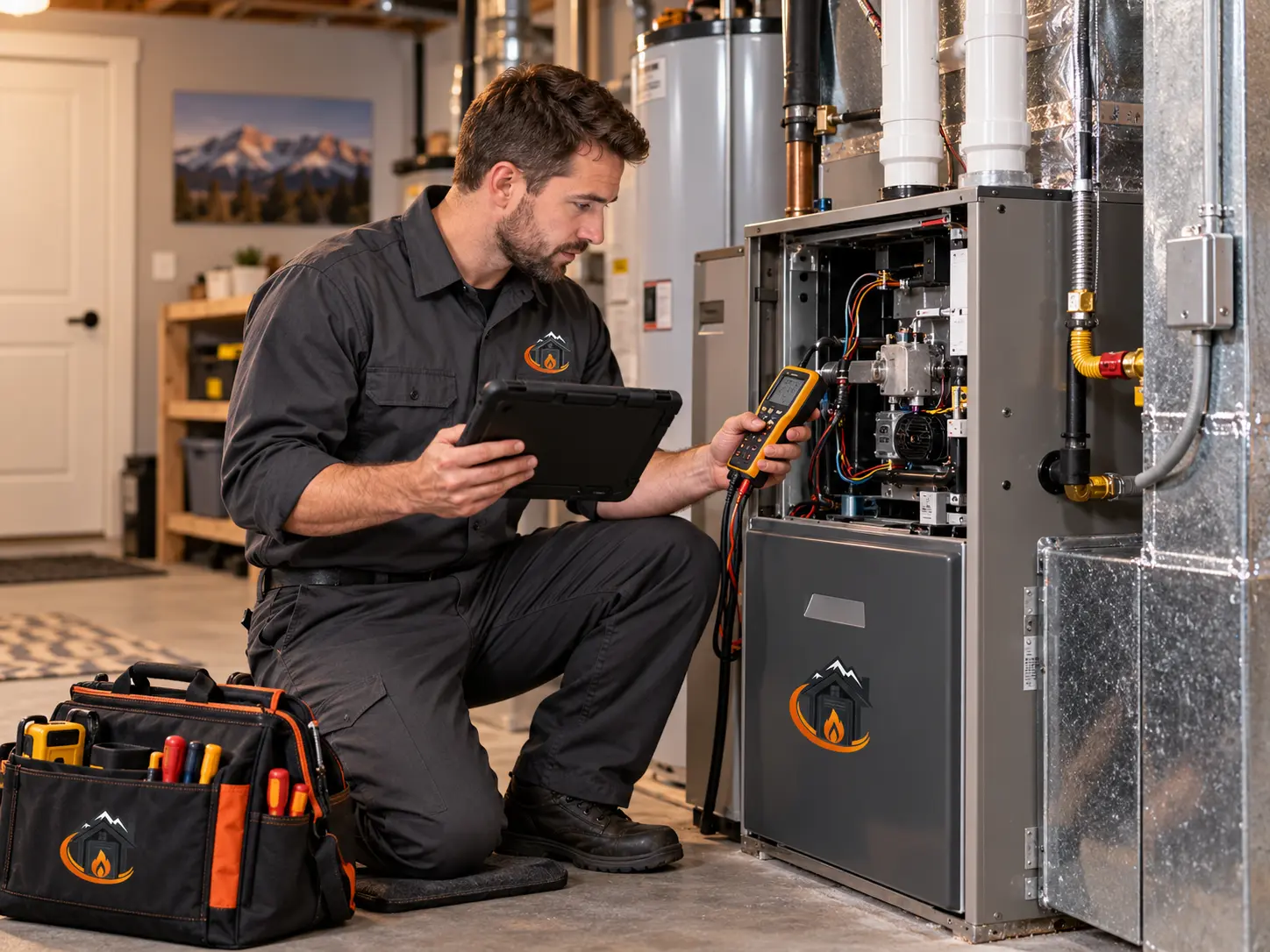
- Observe a full cycle from heat call through shutdown.
- Test electrical supply, control voltage and safety circuit continuity.
- Verify draft and confirm the venting path is clear.
- Measure flame signal in microamps and inspect burner condition.
- Confirm manifold gas pressure against the data plate where applicable.
- Measure temperature rise and check airflow.
- Explain findings, present repair options and quote before work begins.
- Verify safe operation over a complete cycle after the repair.
Safety verification is part of the job
Combustion appliances are inspected as safety equipment, not just comfort equipment. That means looking at flame characteristics, venting integrity and heat exchanger condition alongside whatever brought us out. If something outside the original complaint needs attention, you will hear about it plainly, with evidence, and without pressure.
Not a gas furnace?
If your home is heated electrically, see electric furnace repair. If you are weighing a repair against new equipment, repair vs. replacement and the cost calculator are the places to start.
Furnace Safety Comes First
If you smell gas, see smoke or fire, or suspect carbon monoxide, stop troubleshooting. Move everyone out of the affected area, then contact your gas utility or emergency services from a safe location.
Never bypass a pressure switch, limit switch, rollout switch, door switch or flame sensor, and never attempt gas valve, burner, heat exchanger or live-voltage work. Those controls exist to shut the furnace down before a dangerous condition develops.
Read our carbon monoxide safety guide