What the board controls
On a call for heat, the board energizes the inducer, waits for the pressure switch, powers the igniter, opens the gas valve, monitors the flame sensor, starts the blower after a delay, and watches the limit switch throughout. It also stores diagnostic codes and, in most furnaces, carries the low-voltage transformer fuse.
Because the board touches every other component, its symptoms can mimic almost any other failure — which is precisely why boards are sometimes replaced unnecessarily.
Signs of a genuine board problem
- Random, unrepeatable behavior with no consistent fault code
- The blower or inducer running when it should be off, or refusing to run at all
- Visible burn marks, swollen capacitors or corroded traces on the board
- A repeatedly blown low-voltage fuse after wiring faults are ruled out
- Relays that audibly chatter
- No response to a confirmed thermostat heat call with power verified at the board
Diagnosis before replacement
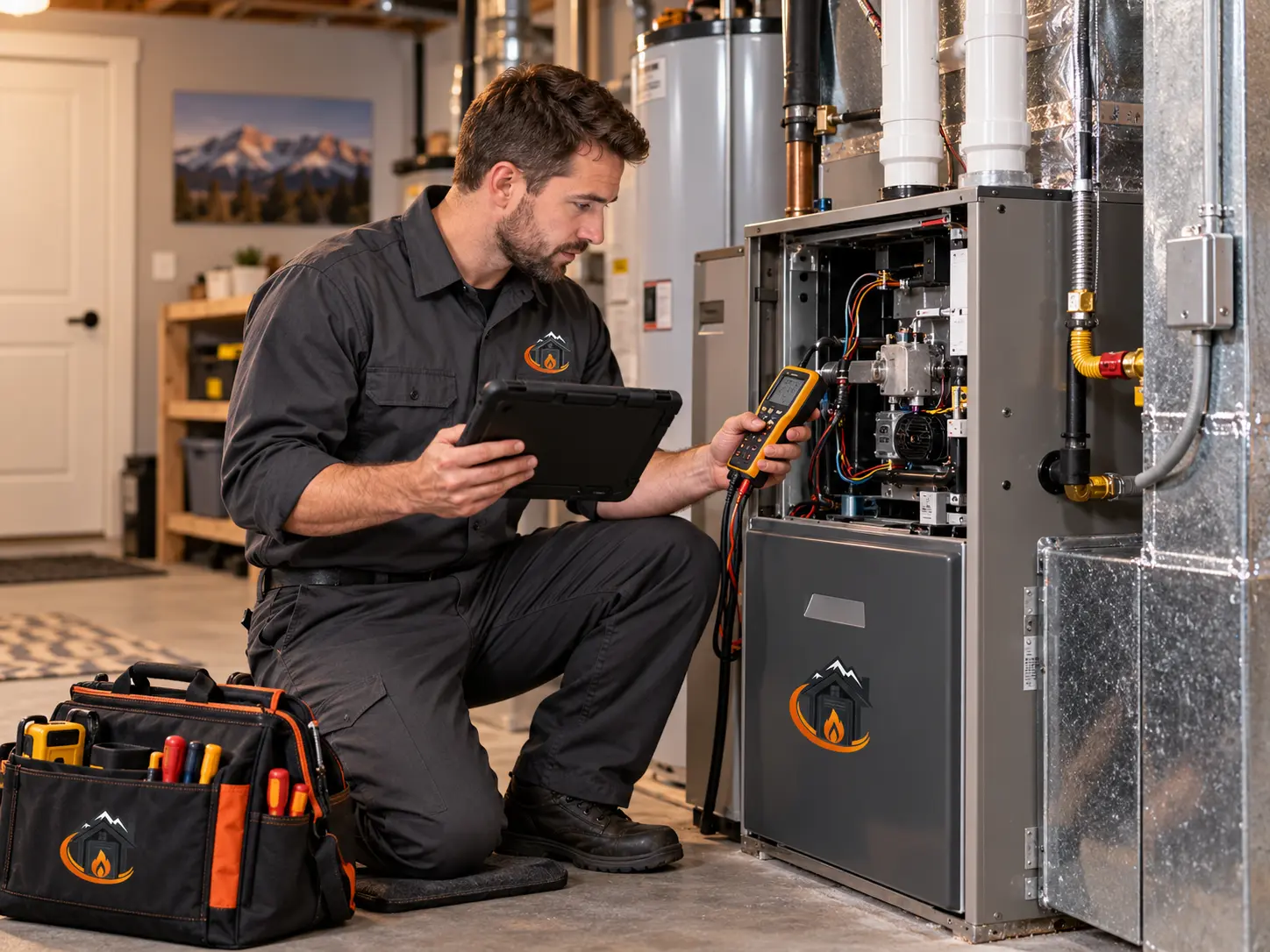
A reliable board diagnosis is a process of elimination with a meter, not a guess. Incoming line voltage, transformer output, fuse continuity, thermostat call at the terminals, safety circuit continuity and output voltage to each component are all verified in sequence. If the board receives correct inputs and fails to produce correct outputs, it is the fault.
Skipping that sequence is expensive, because a control board is one of the pricier commonly replaced furnace parts and because a shorted wire that killed the original board will kill the replacement too.
Talk through your furnace problem
For service availability, please have your 5-digit ZIP code ready.
Call now for a FREE QUOTE and for service availability. Please have your 5-digit ZIP code ready.
Reading the diagnostic code first
The board's LED is the cheapest diagnostic tool in the house. Before any parts discussion, the stored code should be read and interpreted against the legend inside the furnace door. Homeowners who write down the blink pattern before calling genuinely speed things up — see furnace troubleshooting for how to capture it.
Cost and replacement considerations
Boards are model-specific and pricing varies widely by manufacturer and availability. On a furnace well into its second decade, a control board replacement is a reasonable trigger for a repair vs. replacement conversation, particularly if other major components have already been replaced.
Furnace Safety Comes First
If you smell gas, see smoke or fire, or suspect carbon monoxide, stop troubleshooting. Move everyone out of the affected area, then contact your gas utility or emergency services from a safe location.
Never bypass a pressure switch, limit switch, rollout switch, door switch or flame sensor, and never attempt gas valve, burner, heat exchanger or live-voltage work. Those controls exist to shut the furnace down before a dangerous condition develops.
Read our carbon monoxide safety guide