First: is it cold air, or just the start of a cycle?
Every forced-air furnace blows slightly cool air for the first thirty to ninety seconds of a heating cycle. The burners light first, the heat exchanger warms, and only then does the blower start moving air. On some systems the fan-on delay is short enough that you feel a brief cool draft. That is normal behavior, not a fault.
The symptom worth investigating is air that stays cool for the whole cycle, or air that turns cold partway through a cycle and never warms back up.
The thermostat fan setting catches people every winter
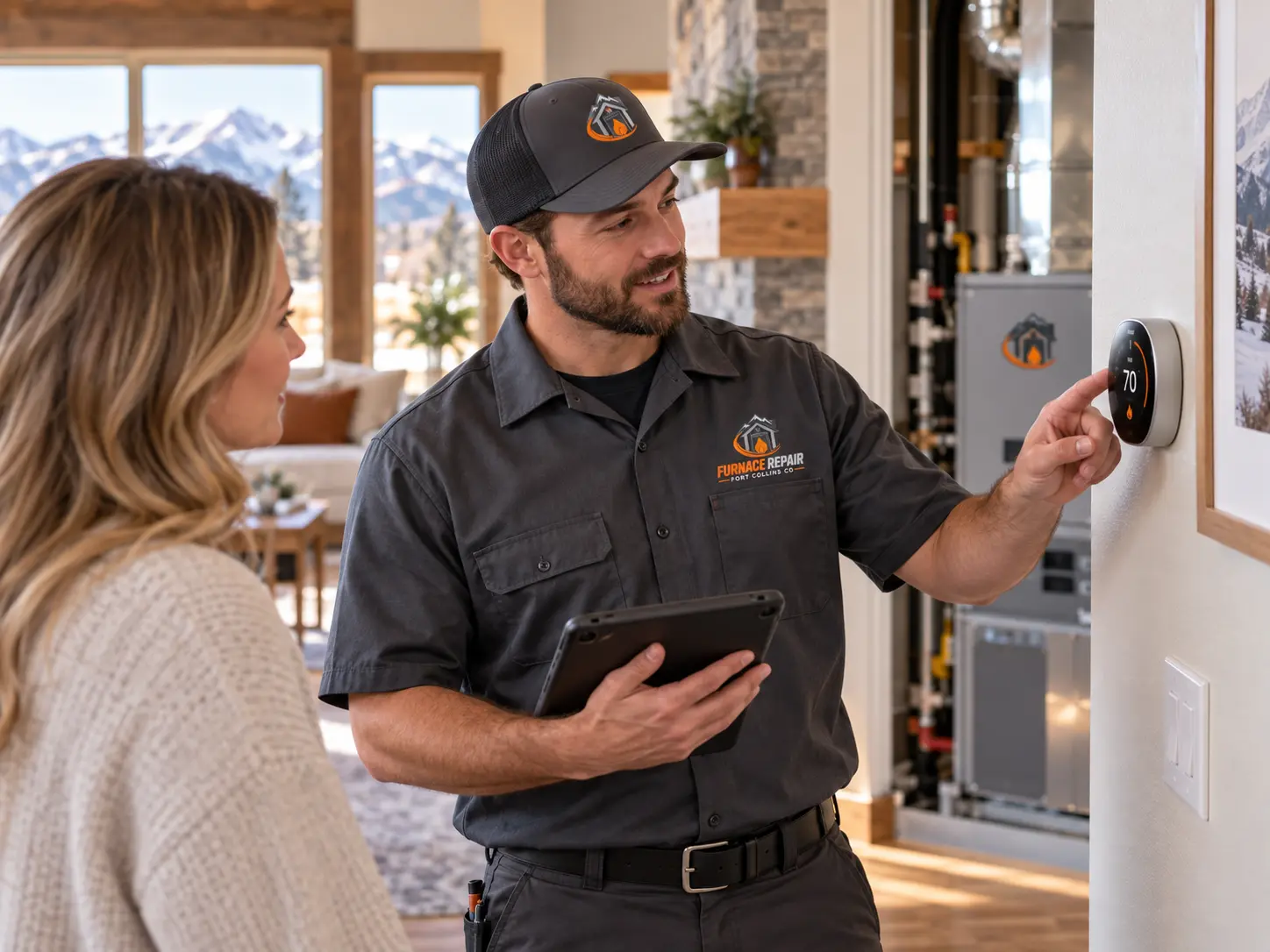
If the thermostat fan is set to ON rather than AUTO, the blower runs continuously — including during the long stretches when the burners are off. Room-temperature air moving across your skin feels cold, so the system seems broken when it is simply circulating. Switching the fan to AUTO is the single fastest check on this list and costs nothing.
If the thermostat is newer and was recently installed or replaced, wiring or configuration can also leave the fan energized incorrectly. Our thermostat problems page covers those cases in more detail.
Mechanical causes of cold air
- Burners light and then shut down because the flame sensor cannot prove flame, leaving the blower to purge with cool air
- The furnace overheats from restricted airflow and the high limit switch cuts the burners while the blower continues
- A failed igniter means no flame at all, though the blower may still cycle
- Gas supply loss — a closed valve, utility interruption, or an empty propane supply on rural properties outside Fort Collins
- Condensate drain blockage on a high-efficiency furnace, tripping the pressure switch and locking out the burners
- Duct leakage in an unconditioned crawlspace or attic diluting warm supply air before it reaches the room
Talk through your furnace problem
For service availability, please have your 5-digit ZIP code ready.
Call now for a FREE QUOTE and for service availability. Please have your 5-digit ZIP code ready.
Safe homeowner checks
- Set the thermostat fan to AUTO and raise the setpoint five degrees above room temperature.
- Time a full cycle. Note whether the air warms at all, and how long the burners stay lit if you can hear them.
- Replace a visibly dirty filter and reopen any closed registers.
- Look for water pooling near a high-efficiency furnace, which can indicate a blocked condensate drain.
- Note any diagnostic light pattern showing through the furnace's sight glass and write it down for the technician.
What this costs to resolve
Cold-air complaints resolve across a wide range. A thermostat setting or a filter is free. A flame sensor cleaning or replacement sits at the low end of repair pricing. A control board, blower motor or gas valve sits considerably higher. Our furnace repair cost page explains what drives the spread, and the cost calculator gives you a planning range before you call.
When cold air is a safety signal
A furnace that repeatedly lights and then shuts down is protecting itself. If you also notice a sooty smell, visible scorching near the burner compartment, or a carbon monoxide alarm activation, stop using the furnace and call for service. If you smell gas at any point, leave the home first and call your gas utility from outside.
Furnace Safety Comes First
If you smell gas, see smoke or fire, or suspect carbon monoxide, stop troubleshooting. Move everyone out of the affected area, then contact your gas utility or emergency services from a safe location.
Never bypass a pressure switch, limit switch, rollout switch, door switch or flame sensor, and never attempt gas valve, burner, heat exchanger or live-voltage work. Those controls exist to shut the furnace down before a dangerous condition develops.
Read our carbon monoxide safety guide