How a modern furnace lights
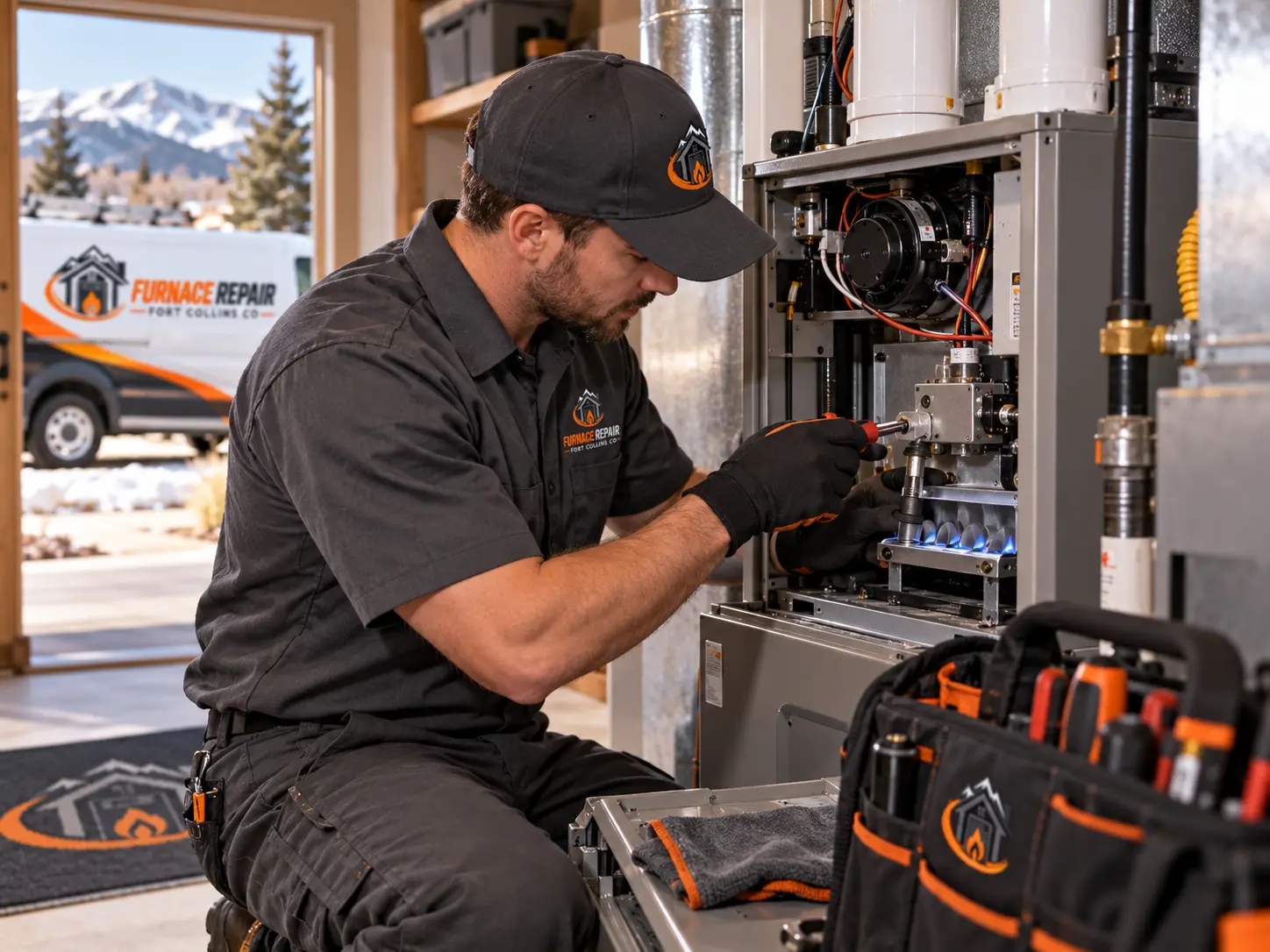
On a typical mid- or high-efficiency gas furnace the sequence runs: thermostat calls for heat, the control board energizes the inducer, the pressure switch proves draft, the hot surface igniter glows, the gas valve opens, the burners light, the flame sensor confirms flame within a few seconds, and the blower starts after a short delay.
Any break in that chain produces an ignition failure. Most furnaces will retry two or three times before locking out and displaying a fault code, which is why homeowners often describe hearing clicking or a repeated whirring that never produces heat.
The usual suspects
- Cracked or aged hot surface igniter — a consumable part with a finite life
- Carbon-fouled flame sensor producing insufficient microamp signal
- Dirty burners with partially blocked ports causing rough or delayed lighting
- Draft problems preventing the pressure switch from closing
- A weak or failing inducer motor
- Gas supply issues, including low pressure or a closed manual valve
- A gas valve that is not opening on command
- Control board faults in the ignition circuit
Reading the lockout
Nearly every furnace built in the last two decades stores diagnostics. A blinking LED behind the access panel, or a two-digit display on newer models, encodes the last fault. The legend is printed inside the furnace door. Writing that code down before calling shortens diagnosis and is one of the most useful things a homeowner can do.
Cycling power to the furnace clears the lockout and lets it retry once, which can restore heat temporarily. Treat that as a reprieve, not a repair — the underlying condition is still present.
Talk through your furnace problem
For service availability, please have your 5-digit ZIP code ready.
Call now for a FREE QUOTE and for service availability. Please have your 5-digit ZIP code ready.
Safe homeowner checks
- Confirm gas service to the home by checking another gas appliance such as a range or water heater.
- Replace a clogged filter, since overheating faults can look like ignition faults.
- Clear snow and ice from sidewall intake and exhaust terminations — a real issue during Fort Collins storms.
- Note the diagnostic blink code.
- Cycle the furnace power once to clear a lockout and observe one full attempt.
What homeowners should never do
Do not attempt to light burners manually, sand or scrape an igniter, adjust the gas valve, or bypass the flame sensor circuit. Flame sensing is a safety function: it is what stops gas flow when combustion fails. A furnace with a defeated flame sensor can release unburned gas into the home.
Repair expectations
Igniter and flame sensor work is typically the least expensive category of furnace repair and is frequently completed in a single visit. Gas valve, control board and inducer replacements cost more and may depend on part availability for the specific model. See gas furnace repair for how we approach combustion diagnostics, and furnace repair cost for pricing factors.
Furnace Safety Comes First
If you smell gas, see smoke or fire, or suspect carbon monoxide, stop troubleshooting. Move everyone out of the affected area, then contact your gas utility or emergency services from a safe location.
Never bypass a pressure switch, limit switch, rollout switch, door switch or flame sensor, and never attempt gas valve, burner, heat exchanger or live-voltage work. Those controls exist to shut the furnace down before a dangerous condition develops.
Read our carbon monoxide safety guide