What the switch actually proves
A furnace pressure switch is a simple diaphragm device connected by a small rubber hose to a port on the inducer housing or heat exchanger. When the inducer motor creates the expected negative pressure, the diaphragm moves and closes a set of electrical contacts. The control board treats that closure as proof that combustion gases are being safely vented.
If the contacts never close, or open during a cycle, the board refuses to open the gas valve. That refusal is the entire point: it prevents a furnace from burning gas when exhaust cannot leave the building.
What usually causes a pressure switch fault
Note the order. A failed switch is at the bottom of the list because it is the least common explanation. Most pressure switch faults are venting or condensate problems wearing a pressure switch code.
- A blocked or restricted vent or intake — snow, ice, nests, or construction debris
- Condensate standing in the inducer housing or drain on a high-efficiency furnace
- A cracked, kinked or disconnected sensing hose
- A weak inducer no longer producing rated draft
- A clogged pressure port
- Occasionally, a genuinely failed switch
Why bypassing is dangerous
Jumpering a pressure switch is occasionally suggested online as a way to get heat back. It is one of the most hazardous things a homeowner can do to a gas appliance. If the vent is blocked, bypassing the switch allows the furnace to fire with combustion products entering the living space — the exact condition that produces carbon monoxide exposure. Read carbon monoxide furnace safety for why this matters, and never defeat this control.
Talk through your furnace problem
For service availability, please have your 5-digit ZIP code ready.
Call now for a FREE QUOTE and for service availability. Please have your 5-digit ZIP code ready.
How the fault is diagnosed
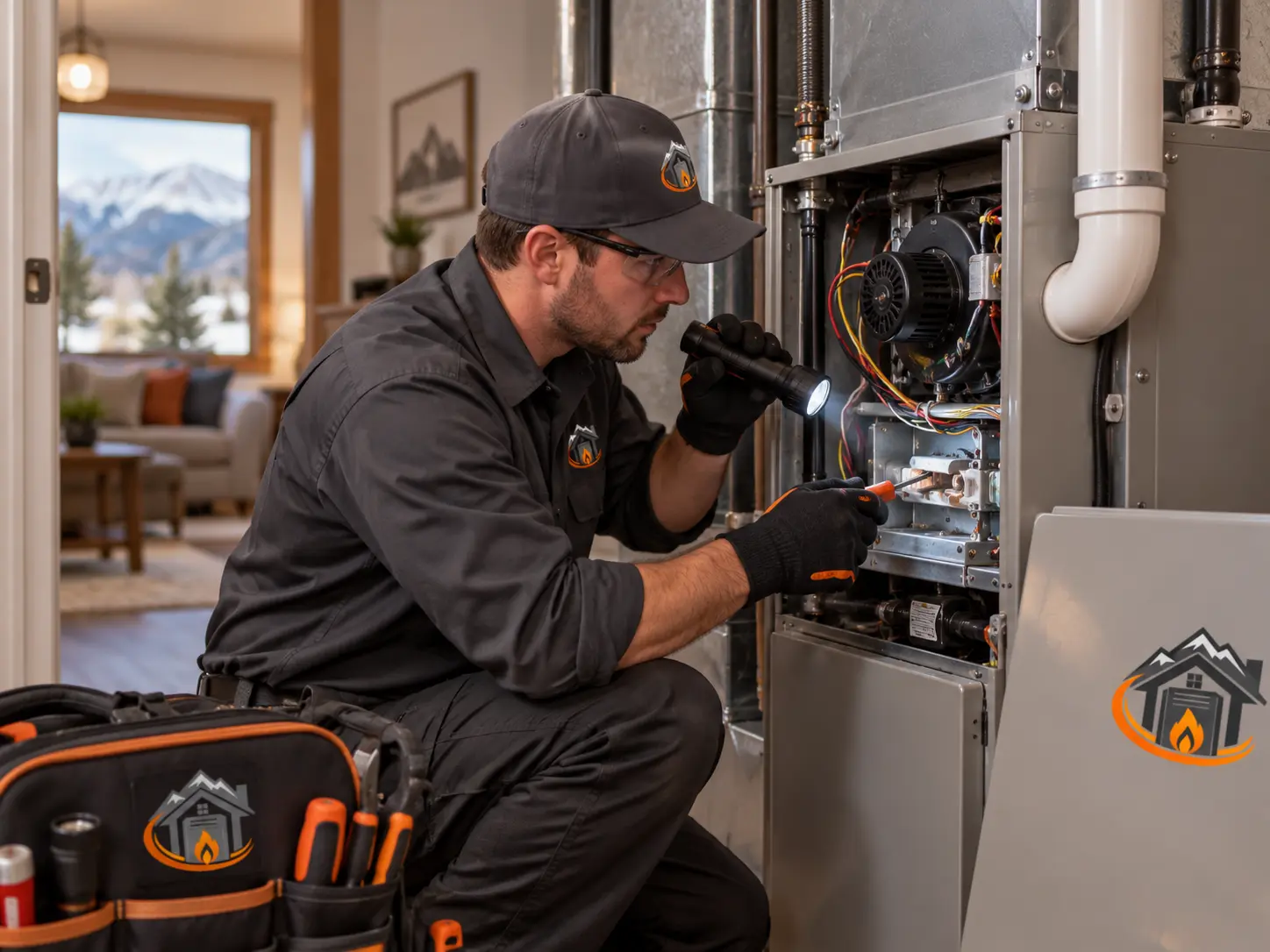
A technician measures actual draft pressure with a manometer and compares it to the switch's rated set point, inspects the hose and port, checks the vent run and terminations, and verifies condensate drainage before ever condemning the switch itself. Only when draft is confirmed adequate and the switch still fails to close is the switch the culprit.
Prevention
Annual service catches condensate restrictions, deteriorating hoses and early inducer wear before they cause a mid-winter lockout. Clearing sidewall terminations after heavy Fort Collins snowfall is a homeowner task worth doing — see the winter furnace checklist.
Furnace Safety Comes First
If you smell gas, see smoke or fire, or suspect carbon monoxide, stop troubleshooting. Move everyone out of the affected area, then contact your gas utility or emergency services from a safe location.
Never bypass a pressure switch, limit switch, rollout switch, door switch or flame sensor, and never attempt gas valve, burner, heat exchanger or live-voltage work. Those controls exist to shut the furnace down before a dangerous condition develops.
Read our carbon monoxide safety guide