What the filter is actually for
A furnace filter's primary job is protecting the equipment — keeping dust off the blower wheel and heat exchanger surfaces. Improving the air you breathe is a secondary benefit that depends heavily on the filter's rating and on how well it seals in its rack.
Understanding that order helps with the most common filter mistake: installing the highest-rated filter available on a system that cannot move air through it.
MERV ratings in plain terms
Higher is not automatically better. Every filter creates resistance, and resistance reduces airflow. On a system with marginal return ducting, a high-MERV one-inch filter can push the furnace into limit-switch cycling — the problem described in weak furnace airflow and short cycling.
- MERV 1–4: basic fiberglass, protects the equipment, captures little else
- MERV 5–8: pleated filters that balance airflow and particle capture; a common residential choice
- MERV 9–12: better capture of fine particles, with higher pressure drop
- MERV 13+: substantially finer filtration, typically requiring a system designed for the added resistance
Thickness matters more than most people expect
A four- or five-inch media filter has far more surface area than a one-inch filter of the same rating, so it captures more while restricting less and lasts much longer between changes. If your furnace has a deep filter cabinet, it is generally the better option. If it has a one-inch slot, a good pleated MERV 8 filter changed on schedule is usually the right balance.
Talk through your furnace problem
For service availability, please have your 5-digit ZIP code ready.
Call now for a FREE QUOTE and for service availability. Please have your 5-digit ZIP code ready.
How often to change it
Rather than relying on a calendar alone, hold the filter up to a light. If light does not pass through the media, it is done regardless of how long it has been installed.
- One-inch pleated filters: check monthly during heating season, typically replace every one to three months
- Four- to five-inch media filters: typically every six to twelve months
- More often with pets, allergies, ongoing construction, or during dusty, windy Front Range stretches
- Always before the heating season starts — see the winter furnace checklist
Installing it correctly
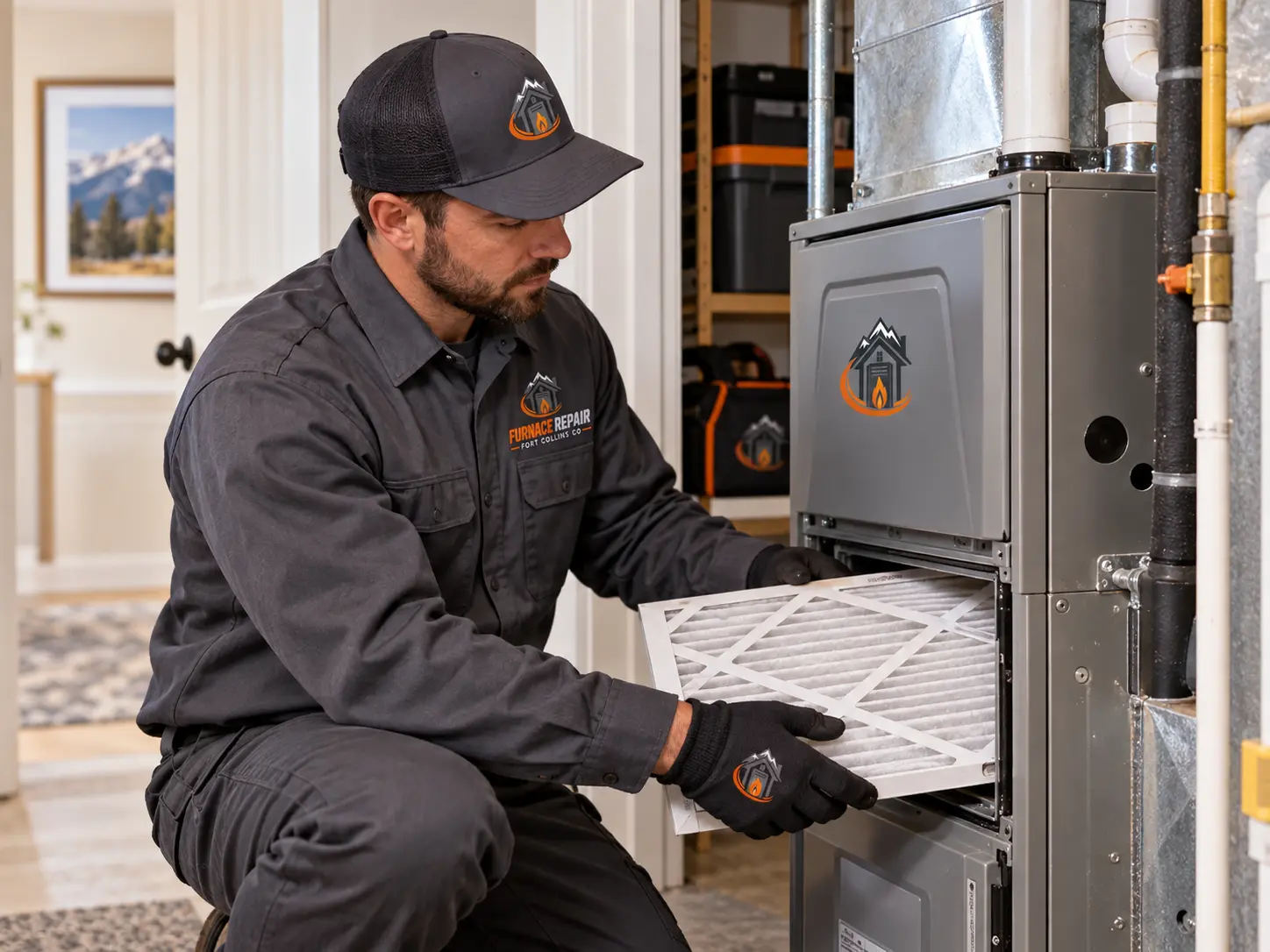
- Turn the furnace off at its service switch before opening the filter compartment.
- Note the size printed on the old filter frame and match it exactly.
- Point the airflow arrow toward the furnace and away from the return duct.
- Seat the filter fully in its track so air cannot bypass around the edges.
- Close and latch the access panel — the door switch must engage for the furnace to run.
When the filter is not the answer
If you are changing filters far more often than expected, or a new filter clogs within weeks, something else is going on: duct leakage pulling dust from a crawlspace, a bypass gap at the filter rack, or ongoing indoor dust generation. That is worth investigating during furnace maintenance rather than treating with more filters.
Furnace Safety Comes First
If you smell gas, see smoke or fire, or suspect carbon monoxide, stop troubleshooting. Move everyone out of the affected area, then contact your gas utility or emergency services from a safe location.
Never bypass a pressure switch, limit switch, rollout switch, door switch or flame sensor, and never attempt gas valve, burner, heat exchanger or live-voltage work. Those controls exist to shut the furnace down before a dangerous condition develops.
Read our carbon monoxide safety guide