What AFUE actually measures
Annual Fuel Utilization Efficiency describes the percentage of fuel energy a furnace converts into usable heat over a heating season. A 95% AFUE furnace delivers 95 cents of every fuel dollar as heat at the appliance, with the rest leaving through the vent.
Importantly, AFUE is measured at the furnace. It says nothing about what happens after the air leaves the cabinet — which is where many homes lose far more than the AFUE difference between two units.
Mid-efficiency versus condensing equipment
Mid-efficiency furnaces vent through a metal flue and are generally less expensive to install. High-efficiency condensing furnaces extract additional heat by condensing exhaust moisture, vent through PVC, and require a condensate drain with freeze protection considered in Colorado installations.
The efficiency gain is real, but so is the installation complexity. Whether the difference pays back depends on heating load, fuel cost, the venting route available and how long you plan to stay.
Staging and blower type often matter more day to day
Longer, lower-output cycles produce more even temperatures and less stratification between floors, which is often what homeowners actually mean when they say a system is inefficient.
- Single-stage furnaces run at full output every cycle
- Two-stage furnaces spend most of the season on low fire with longer, gentler cycles
- Modulating furnaces vary output continuously to match the load
- Variable-speed blowers use less electricity and maintain steadier airflow
Talk through your furnace problem
For service availability, please have your 5-digit ZIP code ready.
Call now for a FREE QUOTE and for service availability. Please have your 5-digit ZIP code ready.
The distribution system decides the outcome
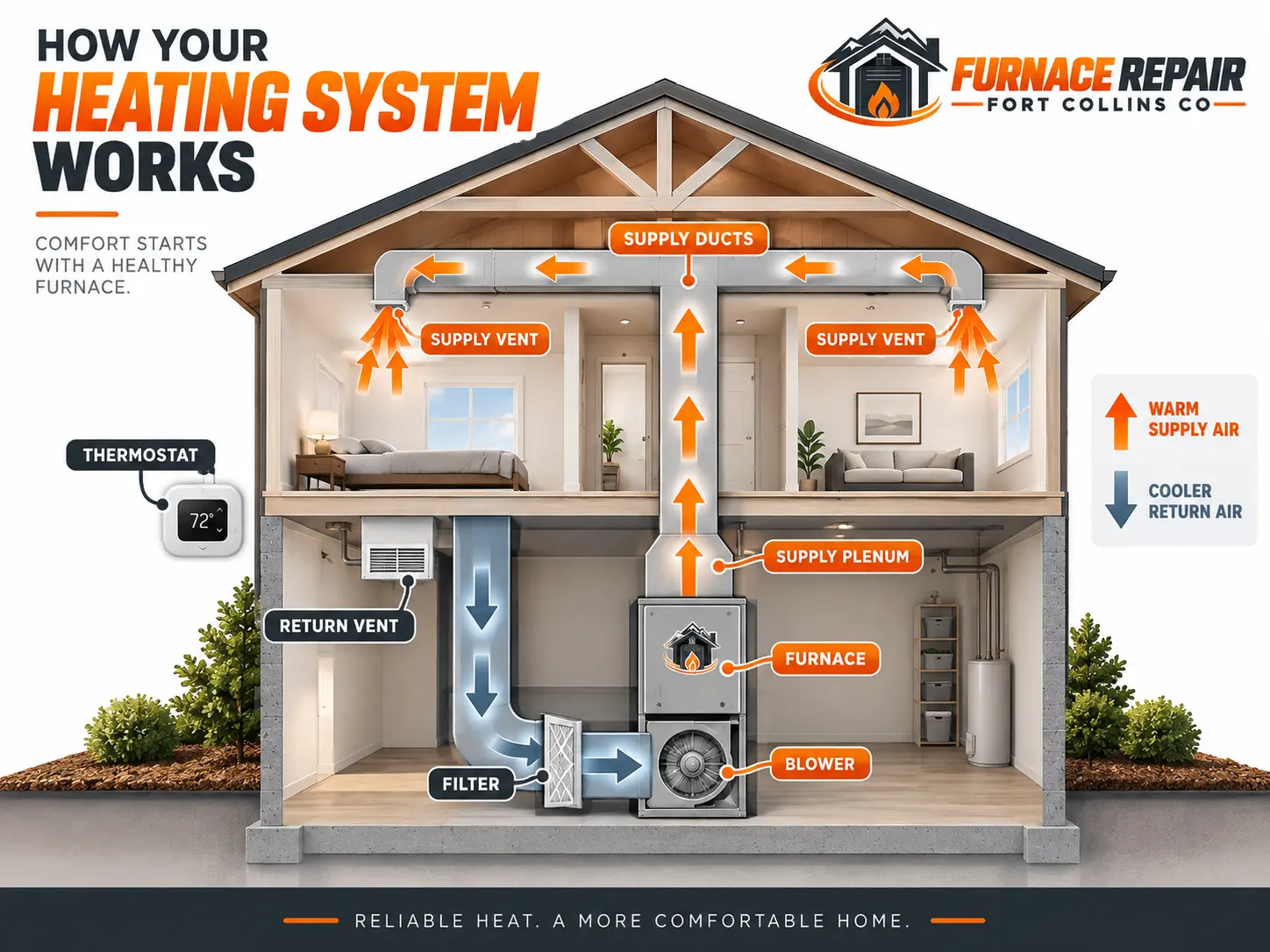
Duct leakage into unconditioned space, undersized returns, crushed flex runs and restrictive filter racks all waste heat the furnace produced correctly. A high-efficiency furnace on a leaky, restricted duct system can easily underperform a mid-efficiency unit on a well-built one.
Measuring static pressure during service reveals this immediately. See weak airflow and the filter guide.
The house itself
Reducing the load is usually cheaper per unit of savings than increasing equipment efficiency, and it makes any future replacement smaller and less expensive.
- Attic insulation depth, which is often the highest-return improvement in older homes
- Air sealing at the attic plane, rim joists, penetrations and can lights
- Window and door weatherstripping
- Sealing ducts that run through crawl spaces, garages and attics
- Thermostat scheduling that matches actual occupancy
Setting realistic expectations
Efficiency improvements produce savings that depend on your fuel rates, usage patterns, home construction and weather — nobody can honestly promise a specific dollar figure. What is reliable is the direction: correct sizing, verified airflow, sealed ducts and a maintained system cost less to run than the alternative.
For current local residential energy program information, see Fort Collins Utilities. If your bills have jumped without an obvious cause, start with high heating bills.