
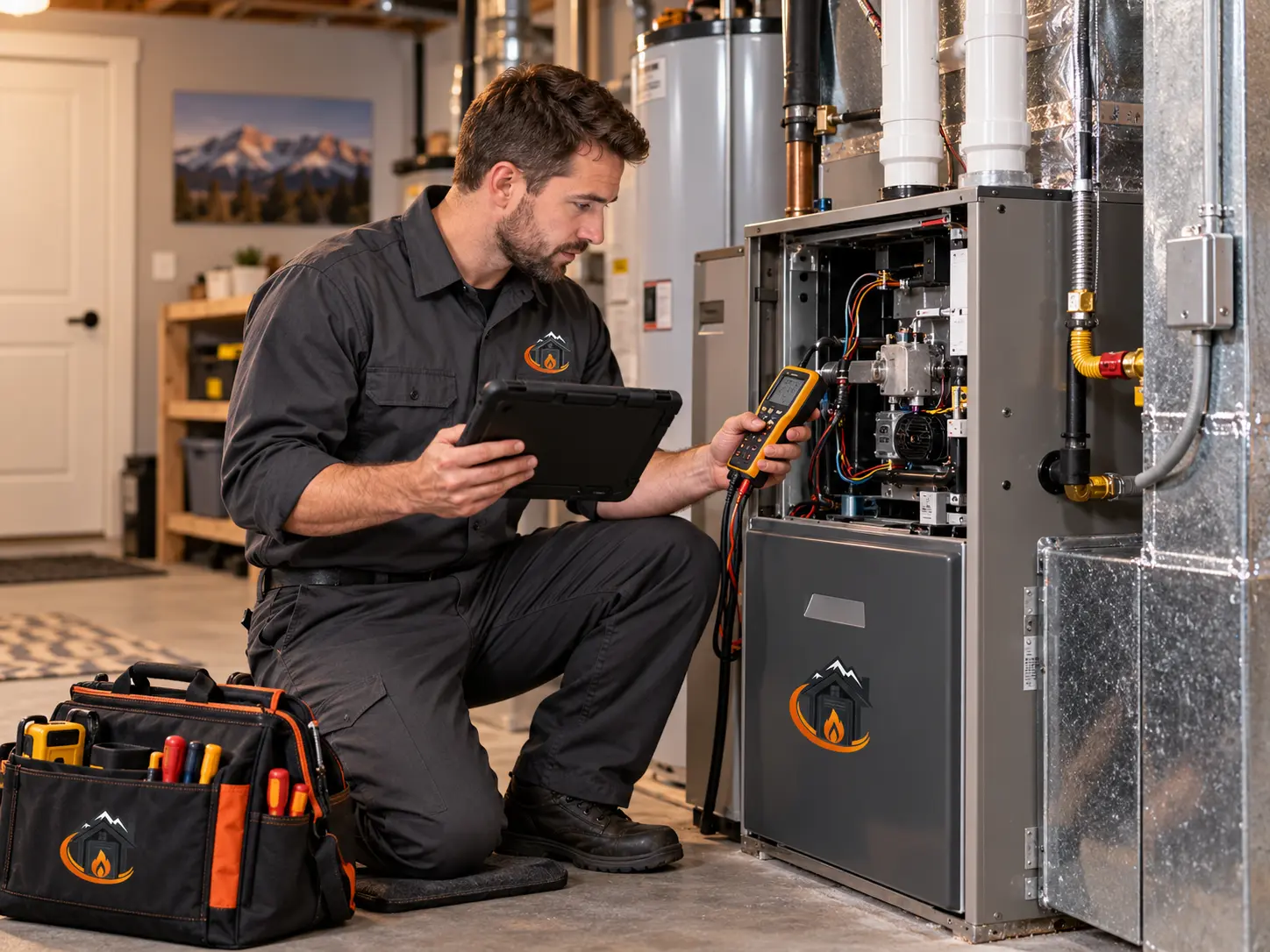
Stop here if you smell gas
Natural gas is odorized with a sulfur-like additive that most people describe as rotten eggs. If you smell that, do not troubleshoot, do not operate light switches, and do not use your phone inside the home. Leave the building with everyone inside, then call your gas utility or 911 from a safe distance. The same applies to smoke, visible flame outside the burner compartment or a sounding carbon monoxide alarm.
Dusty burning smell at first startup
The most common furnace odor in Northern Colorado appears on the first genuinely cold evening of the season. Dust that settled on the heat exchanger over the summer burns off, producing a distinct hot-dust smell for anywhere from a few minutes to a couple of hours. It is normal, it fades, and it does not return later in the season.
If that smell persists for days or returns every cycle, it is no longer seasonal burn-off and is worth investigating.
Electrical or hot plastic odor
A sharp electrical smell, a scent like hot plastic, or an acrid burning odor suggests overheating windings, failing wire insulation or a component running far too hot. Shut the furnace off at its service switch and call for service. Overheating blower motors, failing capacitors and loose high-current connections are all real causes and none of them improve with continued operation.
Talk through your furnace problem
For service availability, please have your 5-digit ZIP code ready.
Call now for a FREE QUOTE and for service availability. Please have your 5-digit ZIP code ready.
Musty or mildew smell
A musty odor when the blower starts usually comes from the air side rather than combustion: a damp filter, moisture in the ductwork, or standing water near a high-efficiency furnace's condensate system. Replacing the filter and correcting the moisture source generally solves it.
Other odors worth noting
- Oily smell — possible on systems near stored chemicals, or from a motor running hot
- Sooty or smoky smell with visible black residue near the burner area — needs immediate professional inspection
- Sewer-like odor — sometimes a dry trap in a nearby floor drain rather than the furnace itself
- Chemical or formaldehyde-like odor — often new building materials or duct sealant curing, not the equipment
What to do next
If the odor is anything other than first-of-season dust burn-off, stop running the furnace and have it inspected. Persistent burning smells are frequently associated with airflow restriction, which is covered in weak furnace airflow, or with blower and electrical faults covered in furnace blower problems. Review carbon monoxide furnace safety so everyone in the household knows the warning signs.
Furnace Safety Comes First
If you smell gas, see smoke or fire, or suspect carbon monoxide, stop troubleshooting. Move everyone out of the affected area, then contact your gas utility or emergency services from a safe location.
Never bypass a pressure switch, limit switch, rollout switch, door switch or flame sensor, and never attempt gas valve, burner, heat exchanger or live-voltage work. Those controls exist to shut the furnace down before a dangerous condition develops.
Read our carbon monoxide safety guide