Airflow is the furnace's other half
A furnace has two jobs: make heat and move it. The combustion side gets most of the attention, but the air side determines what you actually feel in the room. If the blower cannot move its rated cubic feet per minute, supply temperatures climb, the heat exchanger runs hot, and comfort drops even though the burners are firing perfectly.
Our home heating airflow explanation walks through the full path — return grille, filter, blower, heat exchanger, supply plenum, ducts, registers — and weak airflow can originate anywhere along it.
Filter and return-side causes
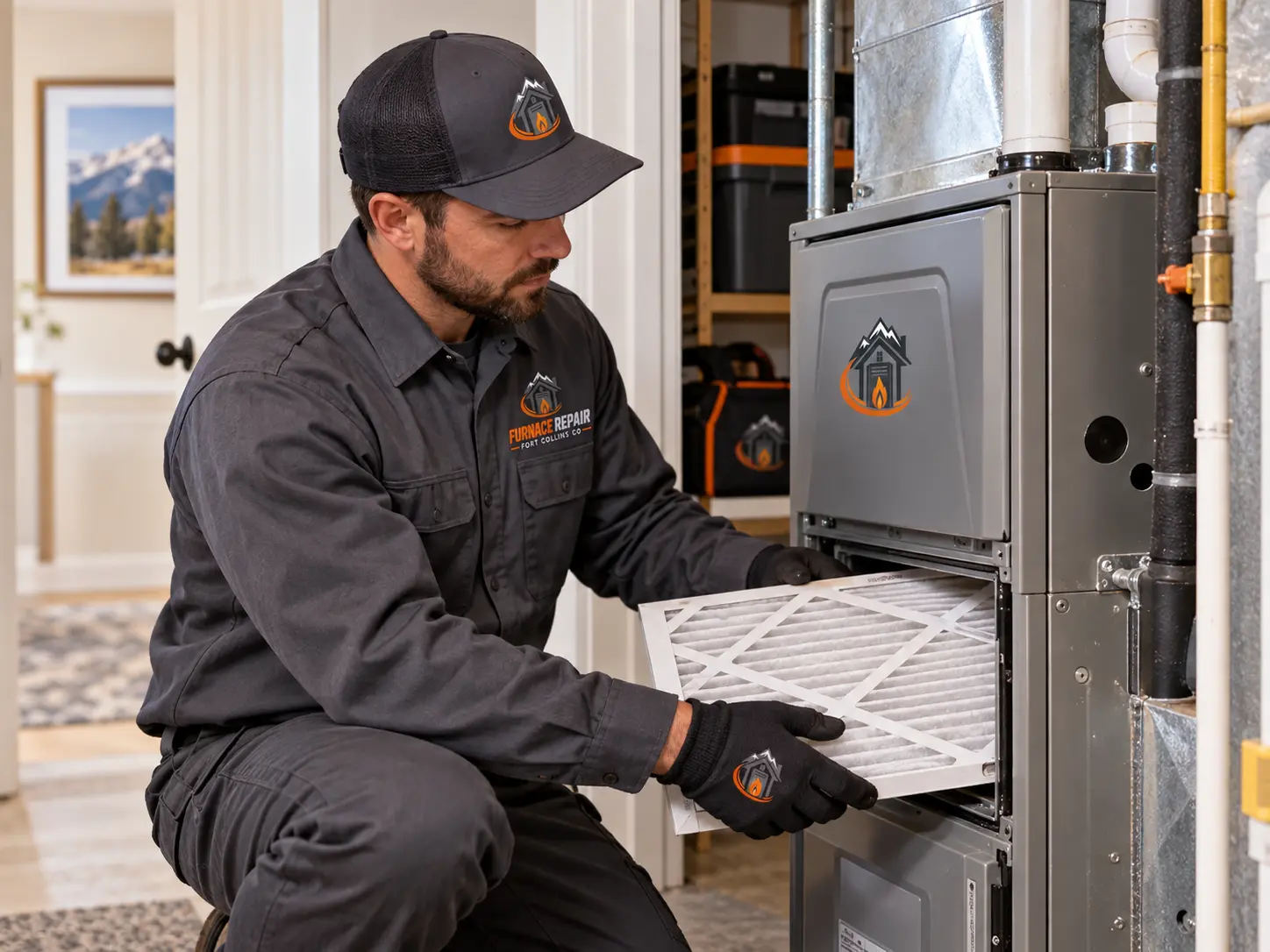
The furnace filter guide covers how to choose a filter that actually fits the system rather than simply buying the highest MERV rating on the shelf.
- Clogged filter, or a filter with a higher pressure drop than the system was designed for
- Undersized return ductwork, common in homes where finished space was added later
- Return grilles blocked by furniture, rugs or storage
- Leaky return plenum pulling air from a crawlspace instead of the living space
- Filter installed backwards or loose in its rack, allowing bypass
Blower and equipment causes
- Dirty blower wheel — accumulated dust on the blades dramatically reduces output
- Failing blower motor or a weak run capacitor
- Incorrect blower speed tap or ECM programming after a previous service call
- Slipping belt on older belt-drive equipment
Talk through your furnace problem
For service availability, please have your 5-digit ZIP code ready.
Call now for a FREE QUOTE and for service availability. Please have your 5-digit ZIP code ready.
Duct and distribution causes
- Crushed or disconnected flexible duct in an attic or crawlspace
- Long, poorly supported flex runs with excessive sag
- Closed or painted-over supply registers
- Duct leakage delivering conditioned air to unconditioned space
- Zone dampers stuck in a partially closed position
Safe checks a homeowner can perform
Localized weakness usually means a duct problem serving that branch. Whole-house weakness usually means filter, blower or main trunk restriction.
- Replace the filter and note whether airflow improves within a cycle.
- Open every supply register and clear obstructions from return grilles.
- Walk accessible duct runs and look for obvious disconnections or crushed sections.
- Compare airflow room by room to see whether the problem is whole-house or localized.
Why airflow problems escalate
Restricted airflow is the leading cause of short cycling and premature heat exchanger stress. Correcting it is often cheaper than the repairs it prevents. If your furnace is also cycling on the limit switch or the house has rooms that never warm up, addressing airflow first will usually resolve more than one complaint at once.
Furnace Safety Comes First
If you smell gas, see smoke or fire, or suspect carbon monoxide, stop troubleshooting. Move everyone out of the affected area, then contact your gas utility or emergency services from a safe location.
Never bypass a pressure switch, limit switch, rollout switch, door switch or flame sensor, and never attempt gas valve, burner, heat exchanger or live-voltage work. Those controls exist to shut the furnace down before a dangerous condition develops.
Read our carbon monoxide safety guide