Silence is a useful diagnostic clue
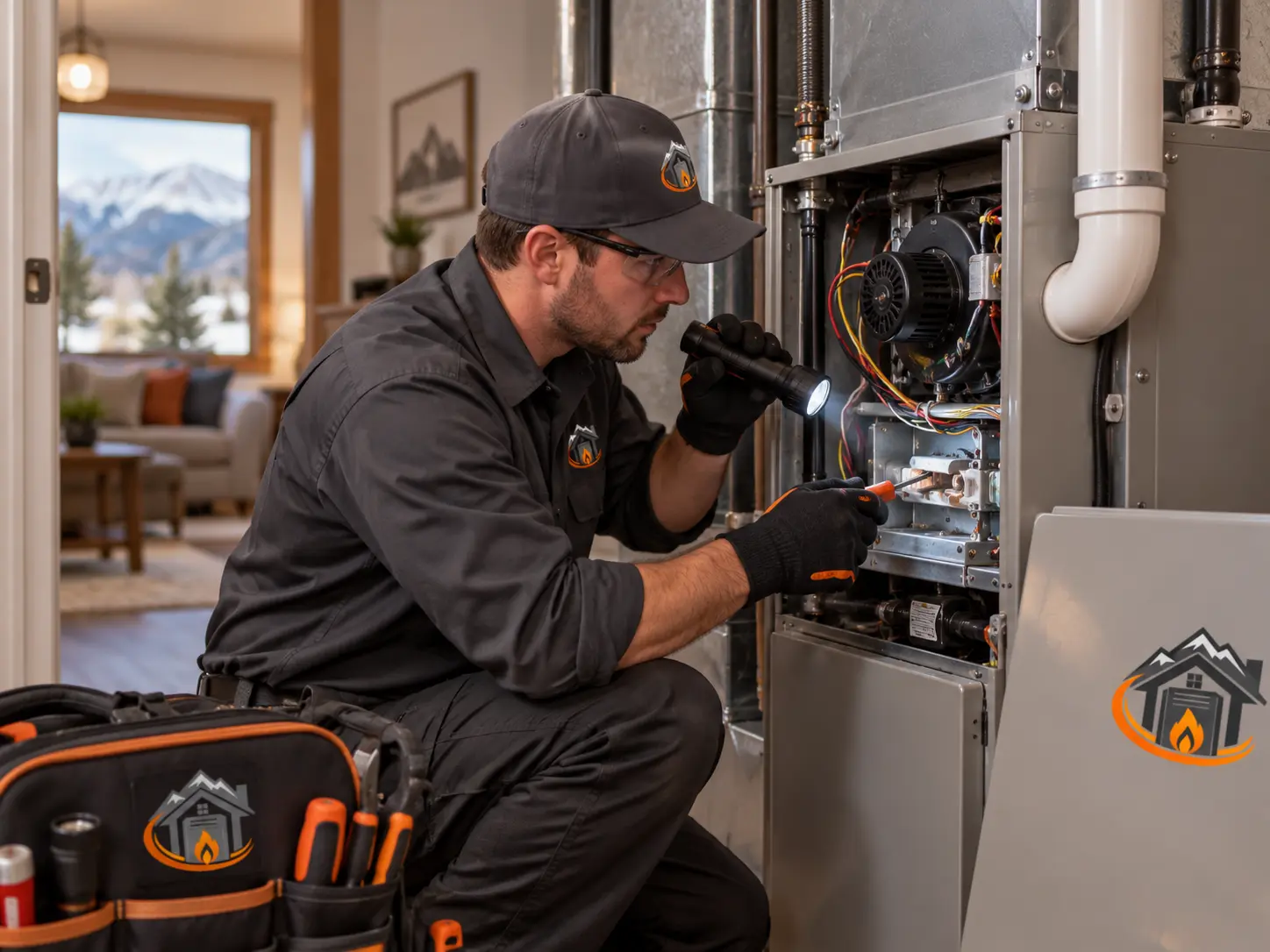
A furnace that makes no sound whatsoever is a different problem than one that tries and fails. Complete silence means the control board is not being powered, is not receiving a heat call, or has an open safety circuit that prevents the sequence from starting. On most modern furnaces, a small LED behind the access panel window tells you immediately whether the board has power and whether it has logged a fault.
Power-related causes
- Furnace service switch turned off — it looks like a standard wall switch and is often mistaken for a basement light
- Tripped circuit breaker at the panel, sometimes from an unrelated event like a summer storm
- Blown low-voltage fuse on the control board, usually a small automotive-style 3 or 5 amp fuse
- Access panel not seated against the door safety switch
- Failed transformer, which removes 24-volt control power entirely
Thermostat-related causes
A thermostat with dead batteries, a loose wire at the terminal block, or a failed display will never send the heat call. Smart thermostats add another wrinkle: some rely on a common wire for continuous power, and a marginal installation can drop offline in cold weather. If your thermostat screen is blank, start there before assuming a furnace fault. See furnace thermostat problems for a deeper walk-through.
Talk through your furnace problem
For service availability, please have your 5-digit ZIP code ready.
Call now for a FREE QUOTE and for service availability. Please have your 5-digit ZIP code ready.
Safety circuit causes
Furnaces are wired so that a single open safety device stops the sequence. A tripped rollout switch, an open manual-reset limit or a stuck pressure switch can all leave the furnace apparently dead. These are not nuisance parts — each one opened because something else went wrong, such as a blocked flue, a cracked heat exchanger or severe airflow restriction. Resetting one without finding the cause is exactly the wrong move.
Safe checks before you call
- Confirm the thermostat has power and is set to HEAT above room temperature.
- Find the furnace service switch and confirm it is on.
- Check the breaker panel and reset a tripped furnace breaker once only.
- Confirm the access panel is fully closed and latched.
- Look for a status LED inside the sight glass and count the blink pattern.
When to schedule diagnosis
If power is present, the thermostat is calling, and the furnace still does nothing, the remaining possibilities — transformer, board, blown fuse, open safety, wiring fault — all require metering. During a Fort Collins cold snap this becomes an urgent situation quickly; see emergency furnace repair for how we prioritize no-heat calls, and furnace repair cost for how electrical repairs are typically priced.
Furnace Safety Comes First
If you smell gas, see smoke or fire, or suspect carbon monoxide, stop troubleshooting. Move everyone out of the affected area, then contact your gas utility or emergency services from a safe location.
Never bypass a pressure switch, limit switch, rollout switch, door switch or flame sensor, and never attempt gas valve, burner, heat exchanger or live-voltage work. Those controls exist to shut the furnace down before a dangerous condition develops.
Read our carbon monoxide safety guide