What filter resistance actually means
Every filter resists the air passing through it. That resistance comes from the density of the media, how much surface area it offers and how loaded it already is. A clean, deep-pleated filter with plenty of area resists very little. A flat, dense filter in a small return resists a lot — and that resistance rises steadily as it collects particles.
Resistance is not a defect. Filters have to resist air somewhat in order to capture anything. The problem appears when the total resistance of the system exceeds what the blower was designed to work against.
How restriction reduces airflow
Blowers do not deliver a fixed volume of air regardless of conditions. As resistance rises, a standard blower moves less air. Variable-speed blowers respond differently — they work harder to maintain airflow, drawing more power and running at higher speeds, which has its own costs.
Either way, a restrictive filter means less air crossing the heat exchanger and less air reaching the rooms. The furnace may be producing heat perfectly well while delivering noticeably less of it.
Blower workload
The blower is the component that pays for restriction. It runs against higher resistance, draws more current, runs warmer and works longer to move the same amount of heat. Over time that adds wear and increases electrical consumption.
When a blower motor fails early, restriction is often part of the story. Blower motor covers how these motors are evaluated and what failure looks like.
Static pressure, explained simply
Technicians talk about static pressure the way a doctor talks about blood pressure. It is a measurement of how hard the air is pushing against the inside of the duct system, and it indicates how much resistance the blower is fighting.
Most residential systems are designed around a fairly modest total static pressure. A filter, ducts, coils and registers each consume part of that budget. A filter that eats an outsized share leaves nothing for the rest, and airflow drops.
The practical value of the measurement is that it turns a vague complaint into a number. "The air feels weak" becomes a reading that can be compared before and after a filter change, which quickly separates a filter problem from a duct or blower problem.
Heat exchanger temperature and limit switch behavior
Combustion produces heat at a fairly consistent rate. Airflow is what carries that heat away. Reduce the airflow and the heat exchanger simply gets hotter, because less air is available to absorb the same energy.
Technicians measure this as temperature rise — the difference between return air and supply air temperature. Every furnace has a rated range printed on its data plate. Restriction drives the rise above that range.
When it climbs too far, the limit switch opens and shuts the burners off while leaving the blower running to cool the exchanger. That is the safety system working correctly. It is also a signal: a furnace that repeatedly trips on limit is telling you that airflow is inadequate, not that the limit switch is faulty. Bypassing a limit switch is never acceptable — it removes the protection that prevents overheating.
Signs a filter may be restricting airflow
Several of these overlap with other causes, which is why measurement matters. Weak furnace airflow and furnace keeps running cover the broader symptom picture.
- Weak air at the registers even though the supply air feels hot
- The furnace heats for several minutes, shuts off, then restarts after the blower has run a while
- Rooms farthest from the furnace fall behind more than they used to
- A whistling or sucking sound at the return grille
- The filter is visibly grey, matted or bowed inward from the pressure across it
- Heating cycles have grown longer without a matching change in the weather
- The blower sounds like it is working harder than usual
Talk through your furnace problem
For service availability, please have your 5-digit ZIP code ready.
Call now for a FREE QUOTE and for service availability. Please have your 5-digit ZIP code ready.
Comfort problems and system stress
Low airflow produces a specific kind of discomfort: air that is hot at the register but scarce, rooms that heat unevenly, and cycles that feel like they never accomplish much. Because the supply air is hot, it is easy to conclude the furnace is fine and the house is at fault.
The longer-term concern is stress. Repeated high-temperature operation is hard on the heat exchanger, the limit control and the blower motor. Running restricted for a full heating season is not an emergency, but it is not free either.
Why the highest MERV is not automatically best
MERV rates how effectively a filter captures particles. Higher numbers capture more, which is genuinely valuable for allergies and air quality. But higher filtration usually means denser media, and denser media means more resistance unless the filter provides more surface area to compensate.
That is the key trade-off. A high-MERV filter in a system with a large filter cabinet and generous return capacity can work very well. The same filter in a one-inch slot on an already-marginal return can cut airflow enough to trip the limit switch.
The right answer is the highest filtration your specific system can handle at acceptable static pressure — which is a measurement, not a guess. Some homes improve filtration best by increasing filter area, for example moving from a one-inch filter to a four- or five-inch media cabinet, rather than by increasing MERV alone.
Filter sizing and fit
- The nominal size printed on the frame must match the filter slot so air cannot bypass around the edges
- A filter that fits loosely lets unfiltered air through and defeats the purpose entirely
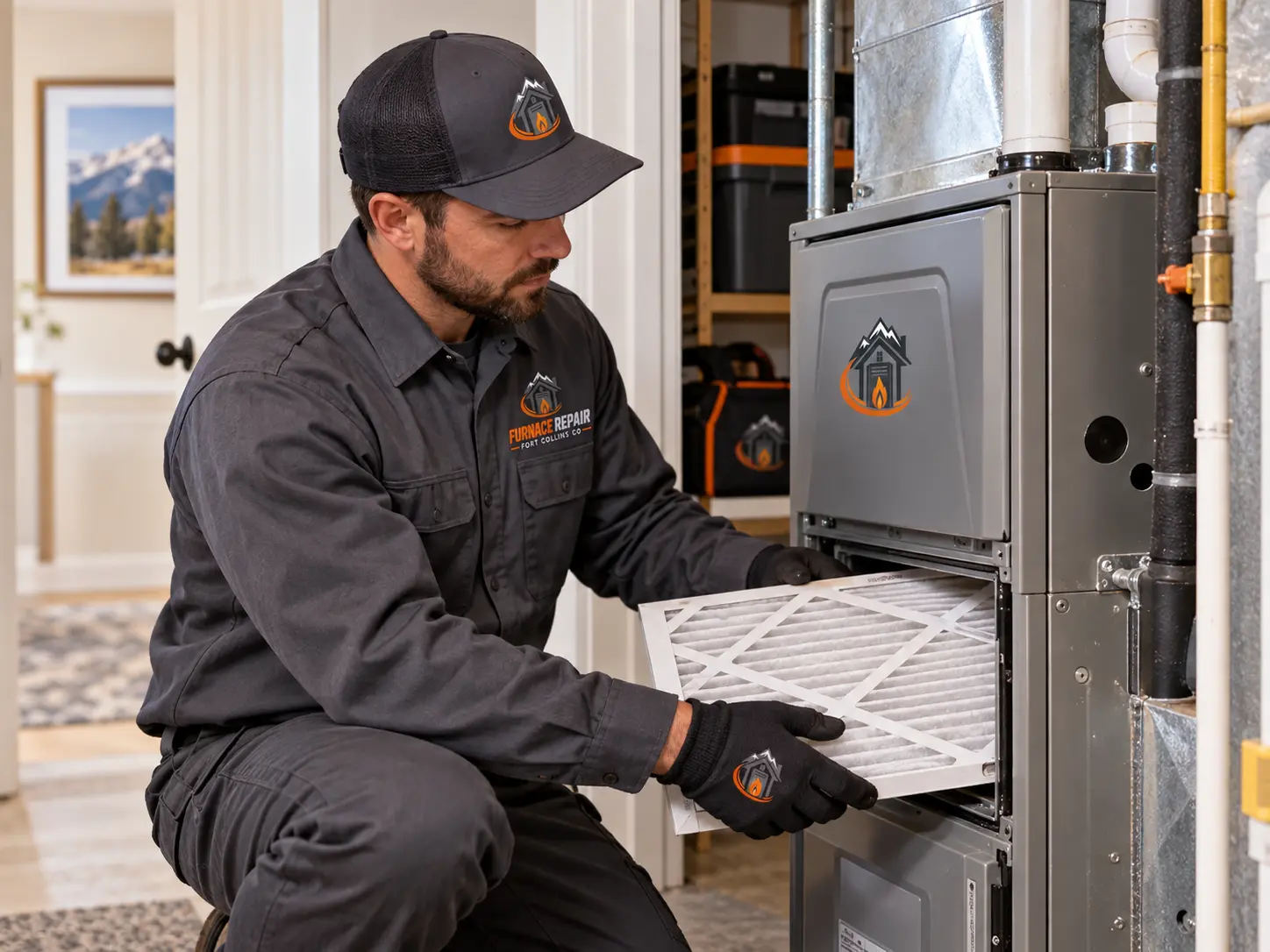
- Thickness matters — a four-inch media filter offers far more surface area than a one-inch filter of the same face dimensions
- The airflow arrow points toward the blower; installing a filter backwards reduces its effectiveness
- Filter racks and doors should close fully so return air is not drawn from the surrounding space
Practical recommendations
Our furnace filter guide covers sizes, types and replacement intervals in more detail.
- Check the filter monthly during heating season and replace it when it looks loaded, not strictly by the calendar.
- Expect faster loading in homes with pets, ongoing construction or heavy run times during cold weather.
- If you want better filtration, look at increasing filter area before increasing MERV in a one-inch slot.
- Have static pressure measured during service so you know what the system can actually handle.
- If the furnace trips on limit or airflow feels weak with a fresh filter, the restriction is somewhere else and should be evaluated.
One thing not to do
Do not run the furnace without a filter. It is tempting when airflow feels weak, and it does temporarily reduce resistance, but it allows dust and debris straight onto the blower wheel, the heat exchanger surfaces and the evaporator coil if one is present. A dirty blower wheel loses capacity permanently until it is cleaned, and a fouled coil creates a restriction far harder to fix than a filter.
If a filter is causing problems, the answer is a filter better matched to the system — not the absence of one.
Furnace Safety Comes First
If you smell gas, see smoke or fire, or suspect carbon monoxide, stop troubleshooting. Move everyone out of the affected area, then contact your gas utility or emergency services from a safe location.
Never bypass a pressure switch, limit switch, rollout switch, door switch or flame sensor, and never attempt gas valve, burner, heat exchanger or live-voltage work. Those controls exist to shut the furnace down before a dangerous condition develops.
Read our carbon monoxide safety guide